
A specialized training workshop on fact-checking and combating disinformation was launched this morning in the city of Taiz. The workshop is organized by the Studies and Economic Media Center (SEMC) with support from the European Union Delegation to Yemen and brings together more than one hundred male and female journalists, fact-checkers, independent media outlets, fact-checking platforms, and online participants.
The workshop is part of a professional track aimed at strengthening collective efforts to confront rising waves of disinformation and establishing practical partnerships within media institutions and outlets and fact-checking platforms.
In his opening remarks, Mustafa Nasr, Chairman of the SEMC, said that holding the workshop “comes at a critical moment when Yemen’s reality is intertwined with war, politics, and informational chaos, reducing the public’s ability to distinguish truth from falsehood.” He emphasized that disinformation has become “one of the gravest threats to social peace, national identity, and the most vulnerable groups, especially women and children.”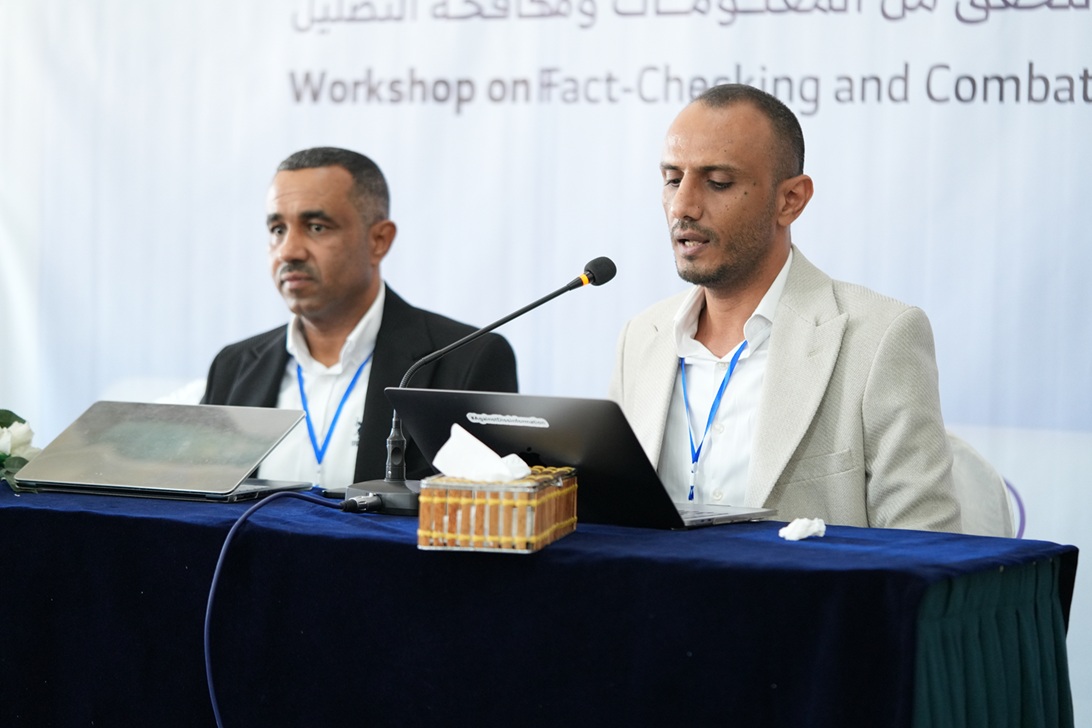
He noted that over the past years, the SEMC has been among the first media institutions to adopt clear efforts in combating disinformation and building journalists’ capacities.
He stressed that the workshop “is not a theoretical session, but a practical laboratory for shaping tools and strategies of cooperation between journalists, media outlets, and fact-checking platforms, and for developing institutional mechanisms that support content credibility.” He urged a shift from merely describing the problem to “developing a national roadmap to reduce media chaos and promote professional, trustworthy journalism that serves the public.”
For his part, Mohammed Esmail, the SEMC’s Executive Manager, expressed his appreciation for the wide participation from various Yemeni governorates despite difficult circumstances. He said the workshop aims “to strengthen professional partnerships and build institutional cooperation mechanisms to combat disinformation,” stressing that individual efforts are no longer sufficient amid the complexity of the media landscape. He added, “We aim to develop a comprehensive strategy shaped by all stakeholders, journalists, media outlets, and civil society organizations.”
Aya Alyan, from the Political Section of the EU Delegation to Yemen, affirmed in her speech that the European Union considers media freedom and access to accurate information “a fundamental pillar of peace, human rights, and good governance.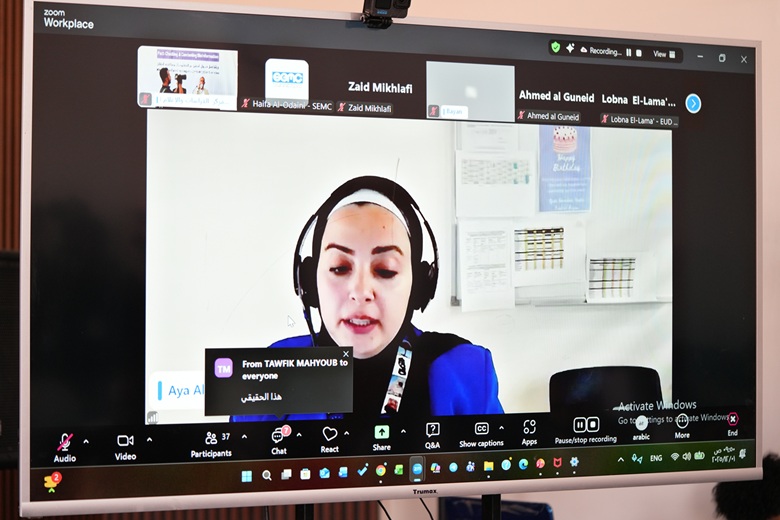 ” She praised the strong presence of women journalists in the workshop, describing it as a reflection of the leading role women play in media initiatives and fact-checking efforts. Alyan stated, “The European Union will continue supporting defenders of truth, accuracy, and professional ethics, as well as training programs and initiatives that promote independent and trustworthy media.”
During the first day’s session, representatives of Yemeni fact-checking platforms, Hakika, Yoopyup, Tadqiq, and VAR Platform, presented insights on the methodologies they use in information verification and the mechanisms employed to detect disinformation. They stressed the importance of enhancing cooperation and exchanging expertise among institutions and platforms to develop a professional environment that preserves public trust.
In their interventions, participants highlighted the importance of the workshop and the diversity of attendees. Journalist Wahb Al-Awadi described the workshop as “a foundation for impactful partnerships between verification platforms and media institutions,” while woman journalist and photographer Fatima Baftaim said participation in the workshop is “an opportunity to reinforce the values of verification as a social and ethical responsibility before being a professional necessity,” affirming that the workshop’s content will influence her work and career path.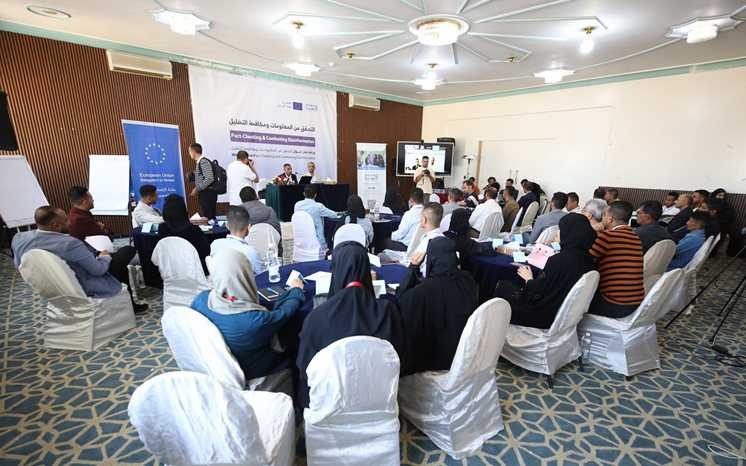
The two-day workshop, held in person in Taiz and simultaneously online, includes discussion and analytical sessions on Yemen’s media landscape, the challenges of disinformation, and mechanisms for building professional cooperation between media outlets and fact-checking platforms, all leading toward drafting the outlines of a national roadmap to strengthen verification processes and combat disinformation.
The workshop will conclude with the development of practical recommendations reflecting the perspectives and expertise of participants, in the hope of establishing a long-term professional path that restores the status and public trust of Yemeni media and fosters a broader professional environment to confront disinformation.
COMMENTS