Displaced journalists, media organization directors, and representatives of local and international organizations discussed on Monday the needs of journalists forced to flee their areas due to threats and the latest military escalation by the Houthi group in Taiz. They also addressed the challenges journalists face after displacement, foremost among them the loss of income and the difficulty of continuing their journalistic work, as well as the situation of journalists stranded in high-risk areas due to security conditions or their inability to afford relocation.
Participants called on local and international organizations and media institutions to provide urgent livelihood and professional support to journalists affected by displacement, assist those stranded in conflict-affected areas, and offer employment opportunities to help them overcome the consequences of displacement and resume their journalistic activities.
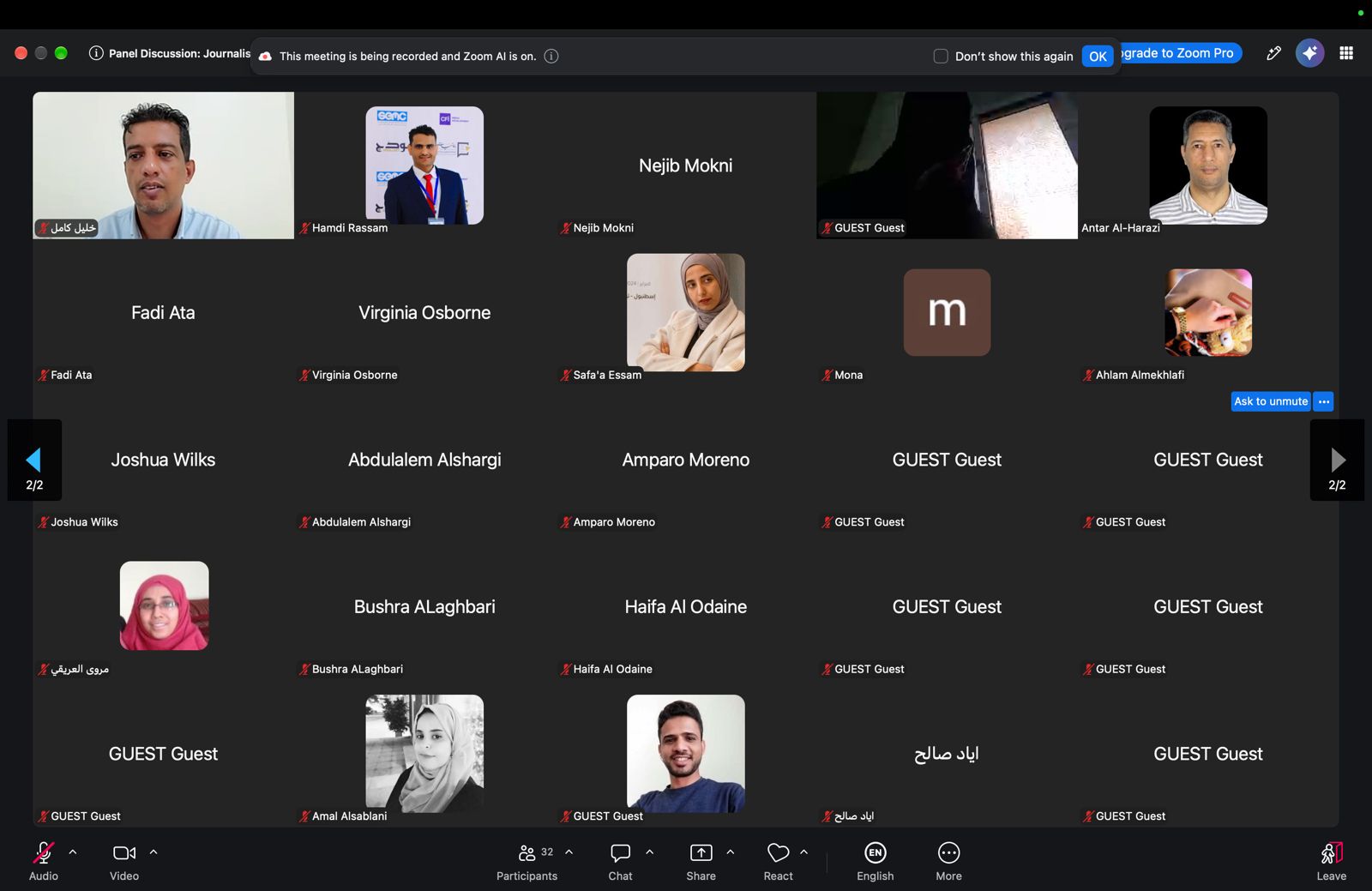
These discussions took place during a seminar organized by the Yemeni Media Freedoms Observatory (Marsadak), affiliated with the Studies and Economic Media Center (SEMC), in partnership with the Faculty of Mass Communication at the University of Aden and the UNESCO Office for the Gulf States and Yemen. Held under the title “Journalism Under Threat: Addressing Violations and Displacement and Strengthening Accountability and Protection,” the webinar marked the International Day to End Impunity for Crimes Against Journalists.
In his opening remarks, Mustafa Nasr, Chairman of the SEMC, stressed that protecting journalists is a shared responsibility requiring the concerted efforts of government and judicial authorities, local and international organizations, universities, and civil society institutions. He emphasized that continued impunity for crimes committed against journalists contributes to their recurrence.
For his part, Waheeb Ozaiban, Dean of the Faculty of Mass Communication at the University of Aden, noted that displaced journalists who have lost their jobs and sources of income need a practical response. He also stressed the importance of uncovering the fate of detained and forcibly disappeared journalists and supporting independent media organizations facing financial and professional challenges that threaten their continued operations.
Khalil Kamel, Chief-in-Editor of the Marsadak, reviewed the situation of journalists amid the military escalation extending from Mocha and the coastal areas to the rural districts of Taiz and the city’s outskirts. He explained that dozens of journalists and media workers had been forced to leave their areas and abandon their homes and property in search of safety, amid economic and humanitarian hardships, with some losing their jobs and sources of income.
Kamel stated that, as of the end of October 2026, the Marsadak had documented the displacement of 147 male and female journalists and media workers from the coastal areas, rural districts, and city of Taiz. He added that journalists in rural Taiz had faced threats, including demands that they stop writing and carrying out journalistic work, negatively affecting content production and media coverage.
Sharing his personal experience of displacement, journalist Omar Hassan spoke about the hardships he and his colleagues had endured. He explained that some journalists are reluctant to disclose that they have been displaced, potentially obscuring the reality of the forced displacement they have experienced because of their work.
Omar Hassan noted that displacement results in the loss of stability and sources of income, as well as mounting financial and psychological burdens. He pointed out that some journalists have been displaced more than once, while others have not received assistance that meets their needs. He stressed the importance of providing them with the necessary support and taking their circumstances into account.
Meanwhile, Mohammed Amin, Managing Editor of Al-Mushahid Net, discussed the challenges facing journalistic work in Taiz city and its rural districts as a result of the military escalation and siege. He noted that disruptions to telecommunications and internet services hinder communication with journalists and official sources, limiting their ability to conduct fieldwork and access information. He added that threats and the risks associated with movement have forced some journalists to stop working, while others are unable to flee because they lack the financial resources to cover relocation and living expenses, amid difficulties in securing their families’ basic needs.
Najib Mekni, Communication and Information Specialist at the UNESCO Office for the Gulf States and Yemen, addressed the digital threats facing women journalists, including defamation, blackmail, the unauthorized publication and manipulation of images, the exposure of personal information, and the targeting of family members. He noted that the consequences of such practices go beyond psychological harm and may extend to physical threats and undermine women journalists’ ability to continue their work.
The webinar concluded by emphasizing the importance of directing support toward the actual needs of journalists affected by displacement. Such support should include livelihood assistance, employment opportunities, legal, psychological, and technical support, as well as assistance to independent media organizations
COMMENTS